
Reading Backwards Through Mark
Zen Lessons 2025 4 26: Mark 2. The Holy Days are for the People

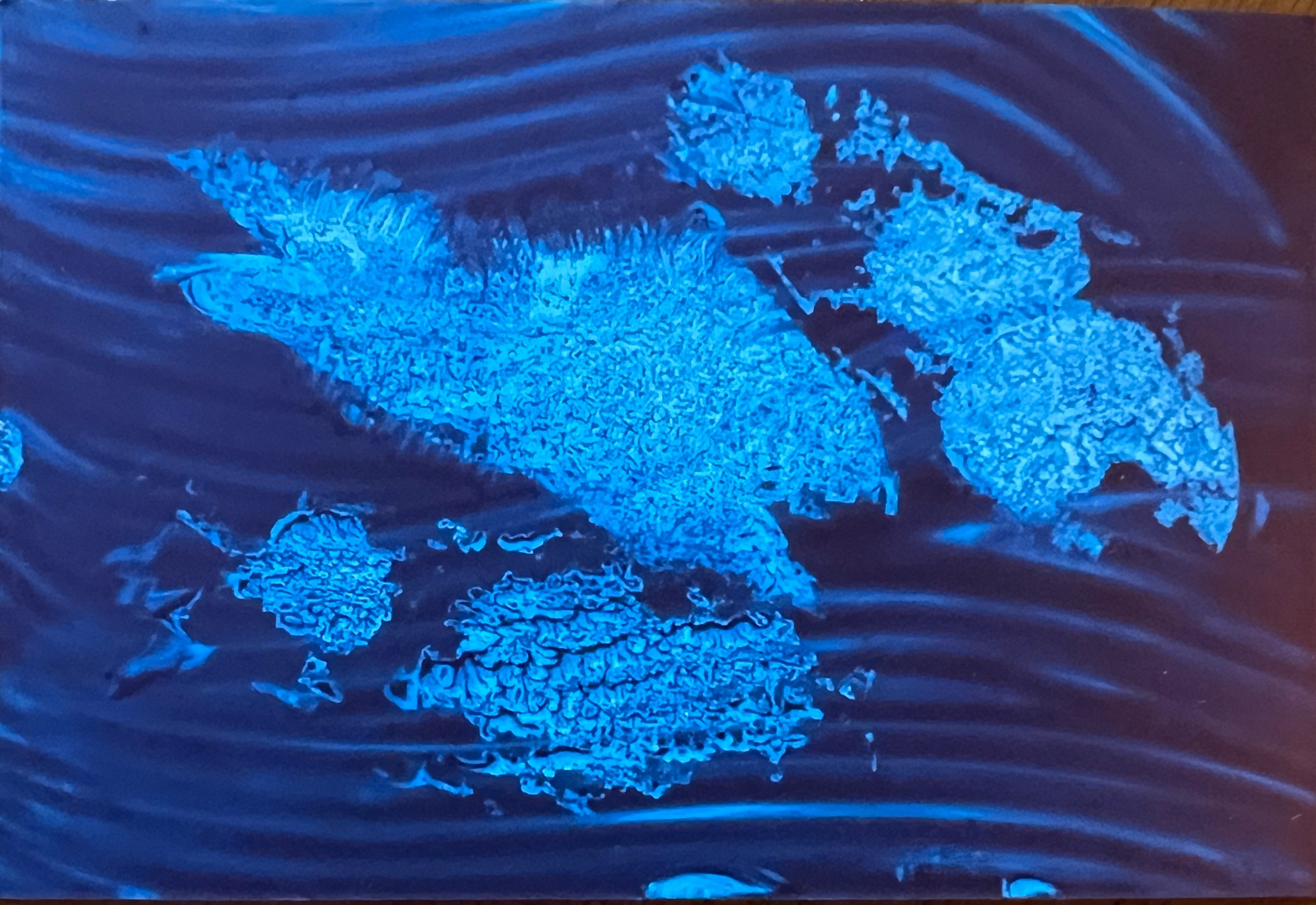
“i will make you fishes”, ink on bristol paper, yesterday around 5:40 pm.
Among the very funny insights these readings have provided me is how "biblical literalists" (who are largely of bad faith) completely ignore the warm and forgiving attitude Jesus has towards taxes and tax collectors. It is as if these literalist grifters are really more concerned with avoiding the tax penalties associated with reasserting segregation and the subjection of women than grappling with the weirdness that is Jesus.

Earlier I suggested reading Mark 3 & 4 as a roll out of all the important themes of the gospel and something similar is happening here. In Mark 3 as many as seven different themes or recurring scenes are introduced (e.g. miracles, parables, dull followers, etc). But in Mark 2 there are simply two scenes of healing that offer parallel experiences: a crowd seeking help, a miracle healing, and angry scholars.

The opening chapter of Mark is, strikingly, a birth scene. Jesus is born rather like Athena, fully formed and ready for action. The second chapter offers two examples of his divine provenance.
The third and forth proliferates from this, and the going back and forth by boat both to visit and escape the crowds gets developed more fully.

Thanks for reading along with me. I was joking with a friend that I am looking forward to writing about Chinese Buddhism again and that I am getting tired of Jesus. But that is a little snarky. Although my tolerance for cynical Christian apologetics is very low, I count among friends and people I respect several who are really into the Calvinist side of this stuff. So long as we do good, what we believe is working. That's how I see it.

Another thing is that I never appreciated how literary, and how Greek, this gospel is. Zen is a very literary religion. Its roots really are literary and artistic. And so, it seems, are those of Christianity.

Obviously my reading for Mark 1 is cued up for Easter morning. Finally!

1.

After a few days
Jesus went back to Capernaum.
Many gathered, there was no room.

He spoke the word to them,
they arrived in throngs,
and one group
brought a paralyzed person to the house.

But because of the crowd
packed at the door
they pulled the roof off
and hauled the poor creature

onto the roof beams
and lowered him down
strapped to the board
he was always paralyzed upon.

He was terrified
as he was lowered
unsteadily
into the room.
Jesus stood there
watching him settle
on to the floor.

My child, your wrongs are undone.

The scholars
each in their own heart
asked:

"How does he speak like this?
He blasphemes. Who can forgive sins
but God alone?"

Immediately in his soul
Jesus knew what they were saying.

Why do you argue these things in your heart?

What is easier to say
to this suffering person:
"Your wrongs are undone!"
or "Pick up your board and walk"?

But so you know
that the son of man
has the powers to forgive
the wrongs on earth
I say to him:

Stand up! Take your board,
go to your home!

This suffering person
went to the door
of the house
before the crowd
and stood there.

The crowd was astonished
and said to themselves:
"We have never seen anything like this!"


2.

And Jesus went out again
across the lake
and a whole crowd
came again to him.

He saw Levi
sitting in the tax office
and said to him:
Follow me.

And he sat in Levi's house
and many tax collectors
and other wrong doers
sat with him and his students.

The scholars were appalled.
"Does he eat with with wrong doers
and with tax collectors?"

Jesus heard them and said:
The strong ones do not need a doctor,
but the weak ones do.

A few days later
the scholars and most others
were fasting
but Jesus and his students
were not.

The scholars
heaped calumny upon them.

Jesus said:

Some day,
He who is to be married to death
will not be among them.
So long as he is among them,
they shall not fast.

When he is gone,
It is then that they will fast.

No one sews new cloth
on old clothes.
The new cloth tears at it
and falls away.

No one pours new wine
into old wine skins.
The new wine
bursts the old skins.

You put new wine
into new skins
so to keep the wine.

Jesus was walking through a wheat field.
His students followed along.
They were all pulling kernels of wheat
from the ears.

The scholars were appalled,
it was the Sabbath.

Jesus said:

Didn't David eat when he was hungry,
and feed those who were with him?

The Sabbath was made for people.
People were not made to serve the Sabbath.
The earthly man is rabbi, even on the Sabbath.